
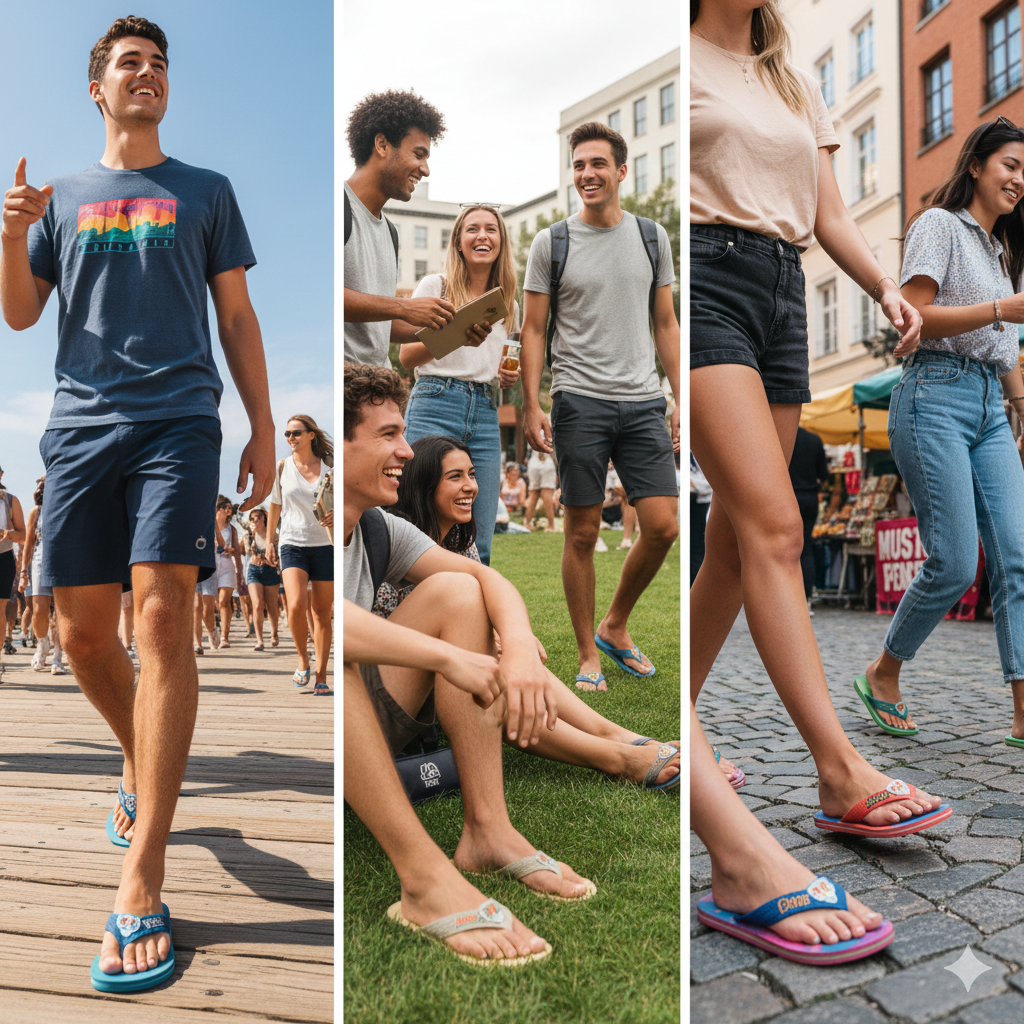
Imagine turning 10,000 daily footsteps into 10,000 brand impressions. While traditional billboards cost thousands per month and reach drivers for mere seconds, custom flip flops create walking advertisements that generate months of exposure for a fraction of the price. The psychology behind this phenomenon reveals why personalized flip flops have become the secret weapon of smart marketers who understand that the best advertising doesn’t feel like advertising at all.
The human brain processes visual information 60,000 times faster than text, making footwear one of the most subconsciously noticed accessories people wear. When someone sporting custom flip flops walks through a crowded beach, shopping mall, or college campus, their feet become mobile billboards that trigger the “mere exposure effect” – a psychological principle proving that repeated exposure to a brand increases positive feelings toward it. Unlike aggressive digital ads that consumers actively avoid, branded flip flops slip past mental defenses because they appear as personal fashion choices rather than marketing messages.
Research in consumer psychology reveals that people form impressions about brands within 90 seconds, with 62-90% of that assessment based purely on color. Custom flip flops leverage this by incorporating precise brand colors that create instant recognition while associating positive emotions with comfortable summer experiences. The wearer becomes an unwitting brand ambassador, generating authentic word-of-mouth recommendations that carry 92% more credibility than traditional advertising according to Nielsen studies.
The Neuroscience of Foot Traffic Marketing
The average person looks down at their feet 150 times per day, creating multiple micro-moments where custom flip flop designs register in peripheral vision. This repetitive brand exposure activates the hippocampus – the brain region responsible for memory formation – strengthening brand recall through what neuroscientists call “incidental learning.” Recipients don’t realize they’re absorbing marketing messages, making the psychological impact more powerful than deliberate advertising attempts.
Behavioral economics explains why people treasure personalized flip flops far beyond their monetary value. The “endowment effect” causes individuals to assign higher worth to items they own, especially customized products that feel uniquely theirs. When promotional flip flops feature recipients’ names, company logos they feel connected to, or designs reflecting their interests, psychological ownership increases dramatically. This emotional attachment ensures extended usage periods, maximizing marketing exposure over months rather than the brief moments typical promotional items provide.
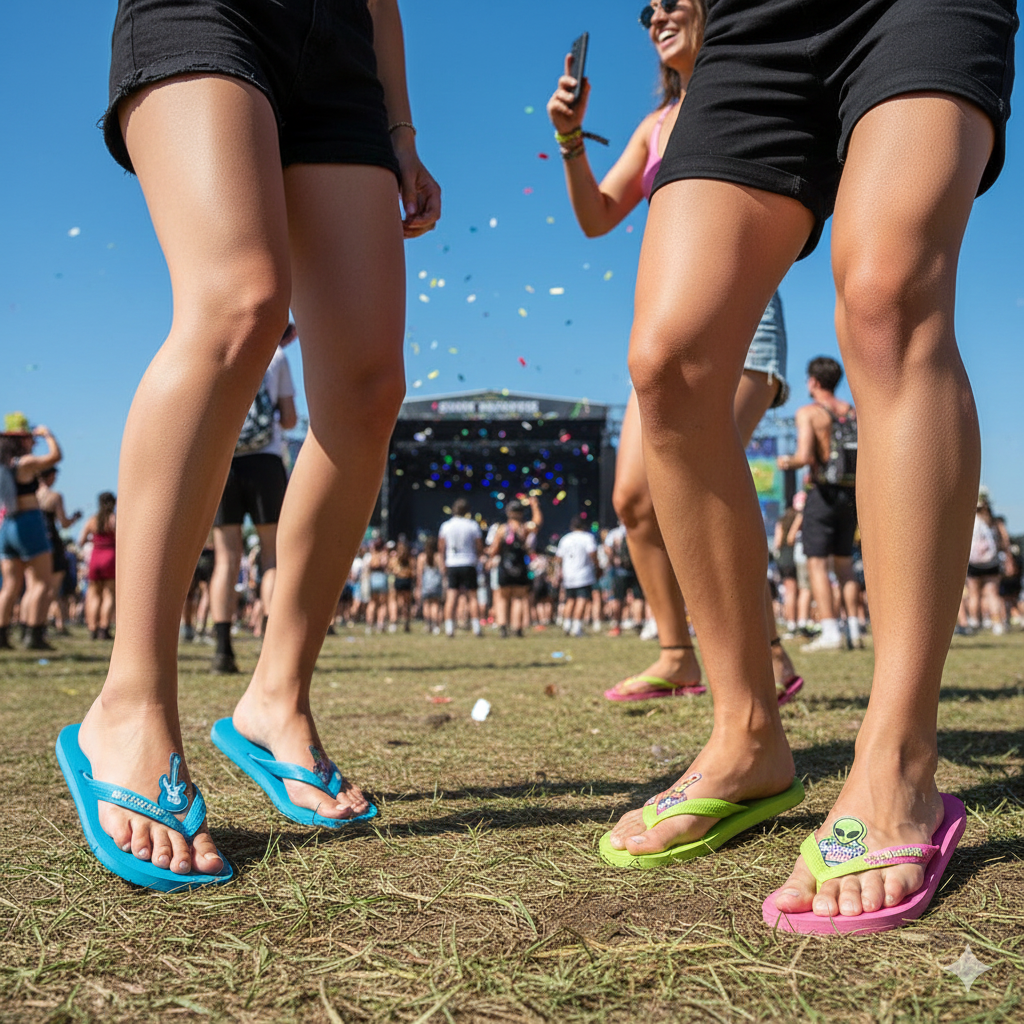
Social proof theory demonstrates why custom flip flops generate organic marketing momentum. When one person receives branded flip flops at an event, others immediately notice and often inquire about obtaining their own pair. This creates viral distribution patterns where initial recipients become sales representatives, enthusiastically explaining the product’s origin and encouraging friends to engage with the sponsoring brand. The comfortable, casual nature of flip flops facilitates these conversations in relaxed settings where people are most receptive to recommendations.
Beyond Branding: The Psychology of Summer Liberation
Custom flip flops tap into deep psychological associations with freedom, vacation, and leisure – emotions that create powerful positive brand connections. When people slip on personalized flip flops, they mentally transition into “summer mode,” a psychological state characterized by relaxation, openness to new experiences, and increased social interaction. Brands that provide these transitional triggers become associated with positive lifestyle changes, building emotional loyalty that transcends typical customer relationships.
The democratization of customization through companies like Custom Logo Flip Flops has psychological implications that extend beyond simple personalization. When individuals can influence product design, they experience increased autonomy and creativity satisfaction – fundamental human needs according to self-determination theory. This psychological fulfillment creates stronger emotional bonds between consumers and brands, leading to higher customer lifetime value and increased referral likelihood.
Cultural anthropologists note that flip flops represent one of humanity’s oldest footwear styles, connecting wearers to archetypal memories of simplicity and natural living. Custom designs allow people to honor this ancient heritage while expressing contemporary identity, satisfying both nostalgia and self-actualization needs simultaneously. This dual psychological appeal explains why personalized flip flops resonate across diverse demographic groups from teenagers to executives.
The Economics of Emotional Investment
Traditional advertising operates on interruption principles – disrupting desired activities to deliver marketing messages. Custom flip flops reverse this dynamic by integrating seamlessly into people’s daily lives, providing genuine utility while delivering brand exposure. This alignment with consumer needs rather than conflict creates what psychologists call “approach behavior” – the tendency to move toward rather than away from marketing stimuli.
Cost-per-impression calculations reveal custom flip flops’ extraordinary marketing efficiency. A $15 pair generating 500 wears over two summer seasons creates approximately 50,000 brand impressions, equating to $0.0003 per impression – roughly 1000 times more cost-effective than digital display advertising. The extended impression lifespan means marketing investments continue generating returns long after initial distribution, creating compound value that traditional advertising cannot match.
The reciprocity principle from social psychology explains why promotional flip flops generate higher engagement rates than other marketing approaches. When brands provide genuinely useful gifts without immediate sales pressure, recipients feel obligated to reciprocate through positive brand consideration, social media sharing, or actual purchases. This psychological debt creates marketing momentum that unfolds organically over time rather than requiring continuous investment to maintain visibility.
Cultural Psychology and Global Appeal
Cross-cultural studies reveal flip flops’ universal psychological appeal transcends geographic and demographic boundaries. From Hawaiian beaches to Mediterranean coastlines, these simple sandals represent shared human desires for comfort, casualness, and connection to natural environments. Custom versions allow global brands to maintain consistent identity while adapting to local preferences, creating psychological bridges between corporate messaging and cultural authenticity.
The informal nature of flip flops breaks down psychological barriers that formal business attire creates. When executives wear custom flip flops to casual company events, they signal approachability and relatability, humanizing corporate brands that might otherwise seem impersonal. This psychological accessibility increases trust and engagement among employees, customers, and partners who appreciate authentic rather than manufactured corporate personalities.
Generational psychology research shows younger demographics particularly value brands that understand their preference for authentic self-expression over polished marketing messages. Custom flip flops allow companies to demonstrate this understanding by providing platforms for individual creativity while subtly maintaining brand presence. This balance between personal expression and corporate identity resonates strongly with millennials and Gen Z consumers who scrutinize brands for authenticity.
The Future of Psychological Marketing
Emerging technologies are expanding custom flip flop psychological impact through augmented reality design tools, social media integration, and data-driven personalization. These advances enable deeper psychological connections by allowing real-time customization based on mood, activity, or social context. The evolution from static promotional products to dynamic, responsive marketing tools reflects growing understanding of consumer psychology and desire for meaningful brand interactions.
Custom flip flops represent the convergence of practical utility, psychological appeal, and marketing efficiency that defines successful promotional products. By understanding the neurological, emotional, and social factors that make personalized footwear so effective, businesses can leverage these psychological principles to create marketing campaigns that feel natural, generate genuine enthusiasm, and deliver measurable results. The secret lies not in the flip flops themselves, but in their ability to transform everyday activities into positive brand experiences that recipients actively choose to repeat and share.